
Holding an IRS LT11 or Letter 1058? The 30-Day Clock You Can't Afford to Ignore
The LT11 Notice of Intent to Levy is the single most urgent letter in the IRS collection sequence. Here is what it means, what happens at day 31, and how to stop a garnishment before it starts.

Katherine M. Johnson, CPA, CTRS
Lead Tax Resolution CPA
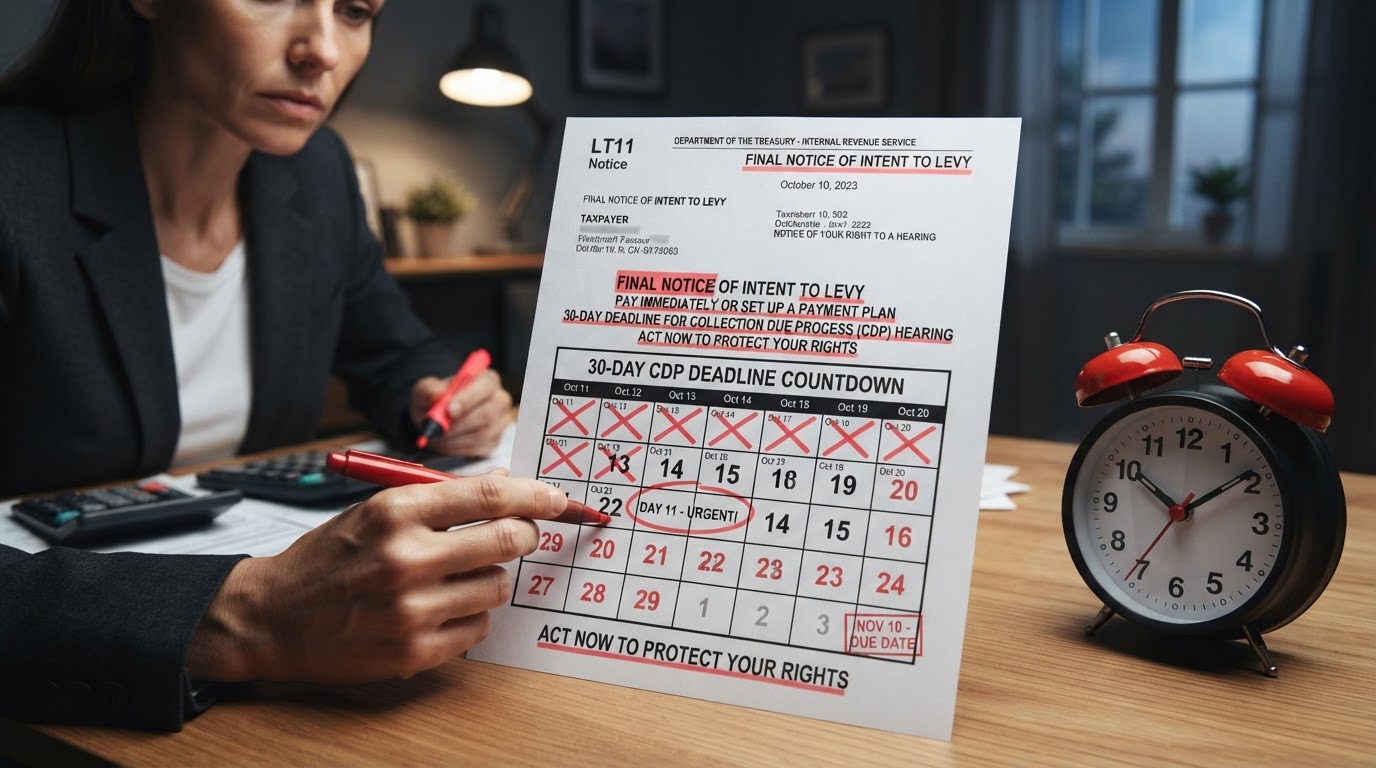
An IRS LT11 / Letter 1058 is the Final Notice of Intent to Levy and Notice of Your Right to a Hearing under IRC § 6330. Filing Form 12153 (Collection Due Process Request) within 30 days legally halts all levy actions while your file is appealed.
If you are holding an IRS Letter LT11 or Letter 1058, your tax case has reached the absolute final stage of automated IRS collection. This is not a polite reminder — it is a formal legal notification that the IRS intends to seize your paychecks, freeze bank accounts, or take state tax refunds within 30 days.
# The IRS Notice Escalation Sequence Explained
1. CP14: First notice of balance due.
2. CP501 & CP503: Escalating payment reminders.
3. CP504: Notice of Intent to Levy (authorizes state refund seizure).
4. LT11 / Letter 1058: FINAL Notice authorizing full wage garnishment and bank levy after 30 days.
Critical CPA Takeaway
The 30-day Collection Due Process (CDP) hearing window on an LT11 notice does NOT extend or reopen once it expires.
# How a CPA Files Form 12153 to Suspend Levy Enforcement
First, we file Form 12153 (Request for a Collection Due Process Hearing) before the 30-day deadline.
This legally suspends all enforcement while your case is transferred to the independent IRS Office of Appeals.
We then pull transcripts and negotiate an Installment Agreement, Currently Not Collectible status, or an Offer in Compromise.
Facing This Exact IRS Situation?
Don't speak with an automated call center or non-licensed salesperson. Speak directly with Katherine M. Johnson, CPA, CTRS.
Frequently Asked Questions (FAQ)
Q: What happens if I miss the 30-day LT11 Collection Due Process deadline?
If you miss the 30 days, you lose your statutory right to go to Tax Court. You can still file an Equivalent Hearing request within 1 year, but it does not automatically stop levy actions.
Summary & Next Steps
Do not wait for day 31. If you hold an LT11 or Letter 1058, contact Next Level Tax Resolution immediately at (800) 236-3741 to preserve your rights. Learn more about IRS collection defense and wage garnishment release.
Katherine M. Johnson, CPA, CTRS
Katherine M. Johnson is a licensed CPA with over 30 years of experience and a Certified Tax Resolution Specialist (CTRS). She personally handles every case — representing individuals and businesses before the IRS and state revenue departments nationwide.
Related Guides & Articles
When an IRS Revenue Officer Visits Your Business: What You Should and Shouldn't Do
Revenue Officers are field enforcement agents assigned to high-dollar or payroll tax cases. Learn your rights when an officer makes contact.
How to Stop Wage Garnishment and Regain Your Paycheck
Receiving an IRS wage garnishment can leave you with very little to cover living expenses. Learn how IRS wage levies work, exemption rules, and how a CPA can release the garnishment.
Tax Lien Release vs. Withdrawal vs. Subordination vs. Discharge: Which Do You Need?
Refinancing a home or selling property with a federal tax lien? Learn which of the four lien remedies applies to your situation so you don't lose weeks at closing.