
Partial Pay Installment Agreements: Pay What You Can Until the Debt Expires
A PPIA allows you to make affordable monthly payments that won't pay off the total balance before the 10-year statute runs out. Here's how it works.

Katherine M. Johnson, CPA, CTRS
Lead Tax Resolution CPA
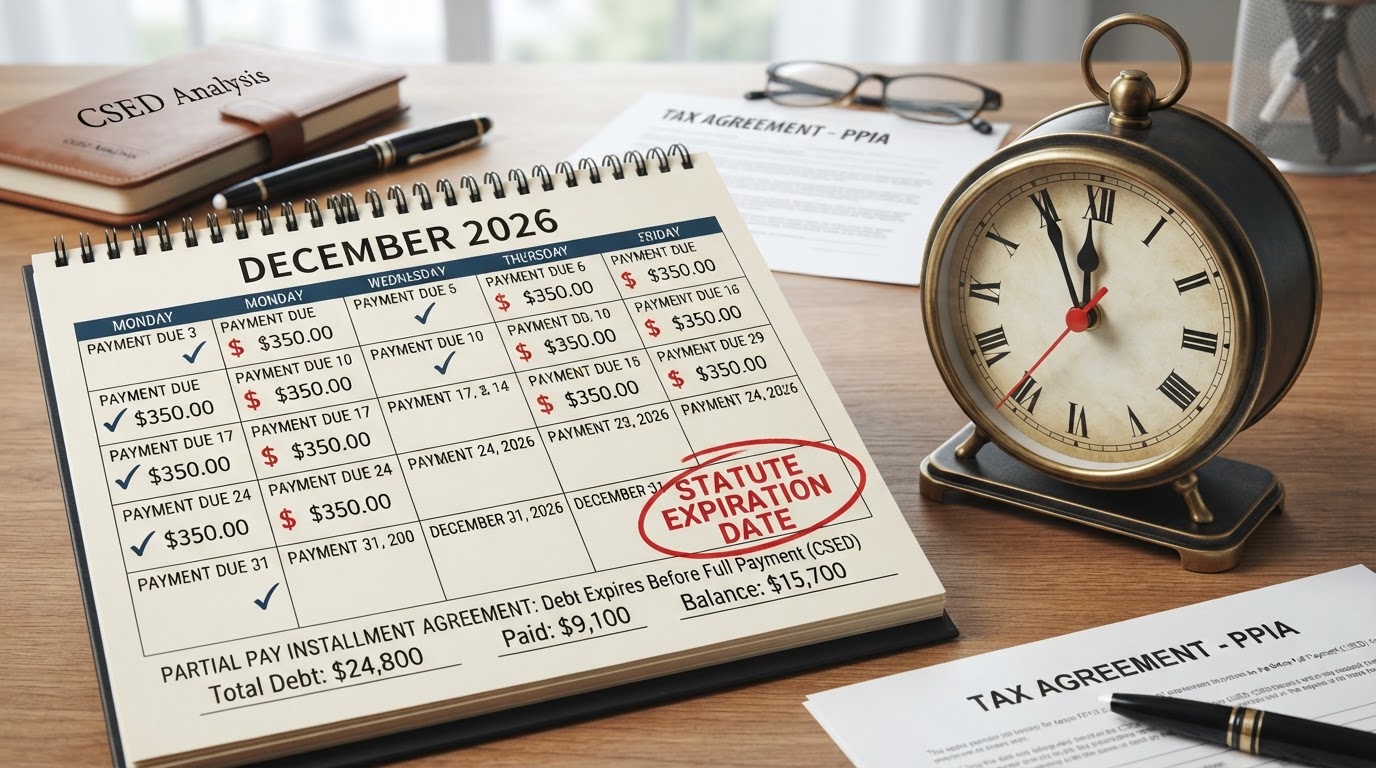
A Partial Pay Installment Agreement (PPIA) allows eligible taxpayers to make small monthly payments based strictly on verified disposable income. Because the monthly payments will not clear the debt before the 10-year CSED expires, the remaining unpaid balance is written off legally when the statute runs out.
A Partial Pay Installment Agreement (PPIA) under Internal Revenue Code § 6159(a) is one of the most powerful and least understood resolution arrangements. It combines an affordable monthly payment plan with the eventual expiration of the 10-year Collection Statute Expiration Date (CSED).
# How PPIA Differs From Standard Installment Agreements
Standard Installment Agreement: Monthly payments are calculated to pay off the full tax, penalty, and interest balance within 72 months.
Partial Pay Installment Agreement: Payments are calculated strictly on what you can afford after IRS allowable living expenses. If you owe $80,000 with 3 years remaining on CSED and can afford $200/month, you pay $7,200 total, and $72,800 is written off at expiration.
Frequently Asked Questions (FAQ)
Q: Does the IRS review my finances while I am in a Partial Pay Installment Agreement?
Yes. The IRS re-evaluates financial information (Form 433-A/F) every 2 years to check if your income or equity increased.
Summary & Next Steps
At Next Level Tax Resolution, Katherine Johnson, CPA, CTRS evaluates whether a PPIA is superior to an Offer in Compromise. Learn more about IRS payment plans and which resolution fits your situation.
Katherine M. Johnson, CPA, CTRS
Katherine M. Johnson is a licensed CPA with over 30 years of experience and a Certified Tax Resolution Specialist (CTRS). She personally handles every case — representing individuals and businesses before the IRS and state revenue departments nationwide.
Related Guides & Articles
12 Questions to Ask Any Tax Resolution Firm Before Giving Them a Credit Card
Protect yourself from commissioned call centers. Ask these 12 questions to verify whether a licensed CPA, EA, or attorney will actually work on your file.
Reasonable Cause Penalty Relief: How Serious Illness or Natural Disaster Removes Penalties
Did a severe medical crisis or natural disaster prevent you from filing on time? The IRS waives failure-to-file penalties if you establish reasonable cause.
Currently Not Collectible (CNC) Status: How to Pause IRS Collection Entirely
If paying your tax debt would prevent you from affording food, rent, or utilities, the IRS can place your account in hardship status. Levies stop while the 10-year clock keeps running.