Currently Not Collectible (CNC) Status: How to Pause IRS Collection Entirely
If paying your tax debt would prevent you from affording food, rent, or utilities, the IRS can place your account in hardship status. Levies stop while the 10-year clock keeps running.

Katherine M. Johnson, CPA, CTRS
Lead Tax Resolution CPA
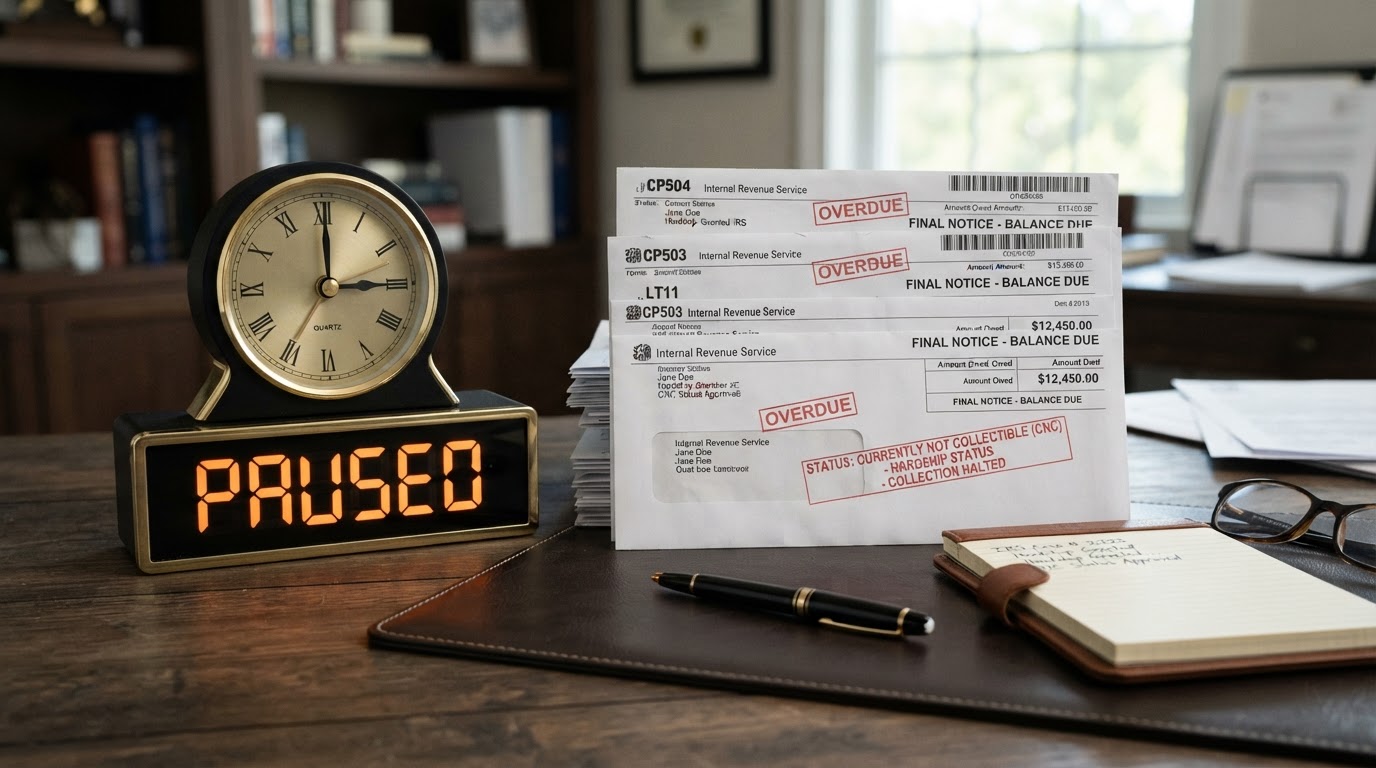
Currently Not Collectible (CNC) status legally halts all IRS wage garnishments, bank levies, and collection letters because you have demonstrated an inability to pay necessary living costs. While in CNC hardship status, the 10-year Statute of Limitations (CSED) continues to run until the debt expires.
Currently Not Collectible (CNC) status is an official IRS hardship designation (Status 53) granted when a taxpayer's gross monthly income is fully consumed by necessary living expenses defined by IRS National and Local Standards. When an account is placed in CNC status, the IRS immediately halts all active collection efforts.
# Strategic Advantages of Currently Not Collectible Status
1. Immediate Relief: All wage levies, bank seizures, and aggressive collection contact are suspended.
2. CSED Expiration: Because the 10-year collection statute clock continues to tick, remaining in CNC status until CSED expiration results in the permanent write-off of the balance.
3. Annual Income Review: The IRS reviews your tax returns annually. As long as your income remains below the threshold, CNC status remains intact.
Critical CPA Takeaway
While CNC status halts levies, interest and failure-to-pay penalties continue to accrue in the background.
Frequently Asked Questions (FAQ)
Q: Will the IRS keep my future tax refunds while I am in Currently Not Collectible status?
Yes. Under federal treasury offset rules, any future federal or state income tax refunds will automatically be applied to your outstanding back tax balance while in CNC status.
Summary & Next Steps
Katherine Johnson, CPA, CTRS prepares rigorous Collection Information Statements (Form 433-A/F) to prove hardship and secure Currently Not Collectible status. If CNC isn't the right fit, she'll tell you whether a payment plan or Offer in Compromise is more appropriate.
Katherine M. Johnson, CPA, CTRS
Katherine M. Johnson is a licensed CPA with over 30 years of experience and a Certified Tax Resolution Specialist (CTRS). She personally handles every case — representing individuals and businesses before the IRS and state revenue departments nationwide.
Related Guides & Articles
12 Questions to Ask Any Tax Resolution Firm Before Giving Them a Credit Card
Protect yourself from commissioned call centers. Ask these 12 questions to verify whether a licensed CPA, EA, or attorney will actually work on your file.
Reasonable Cause Penalty Relief: How Serious Illness or Natural Disaster Removes Penalties
Did a severe medical crisis or natural disaster prevent you from filing on time? The IRS waives failure-to-file penalties if you establish reasonable cause.
Penalty Abatement: Reduce or Remove IRS Tax Penalties Legally
IRS penalties can quickly double or triple your tax bill. Learn how First-Time Abatement and Reasonable Cause relief allow taxpayers to legally reduce or eliminate IRS tax penalties.