12 Questions to Ask Any Tax Resolution Firm Before Giving Them a Credit Card
Protect yourself from commissioned call centers. Ask these 12 questions to verify whether a licensed CPA, EA, or attorney will actually work on your file.

Katherine M. Johnson, CPA, CTRS
Lead Tax Resolution CPA
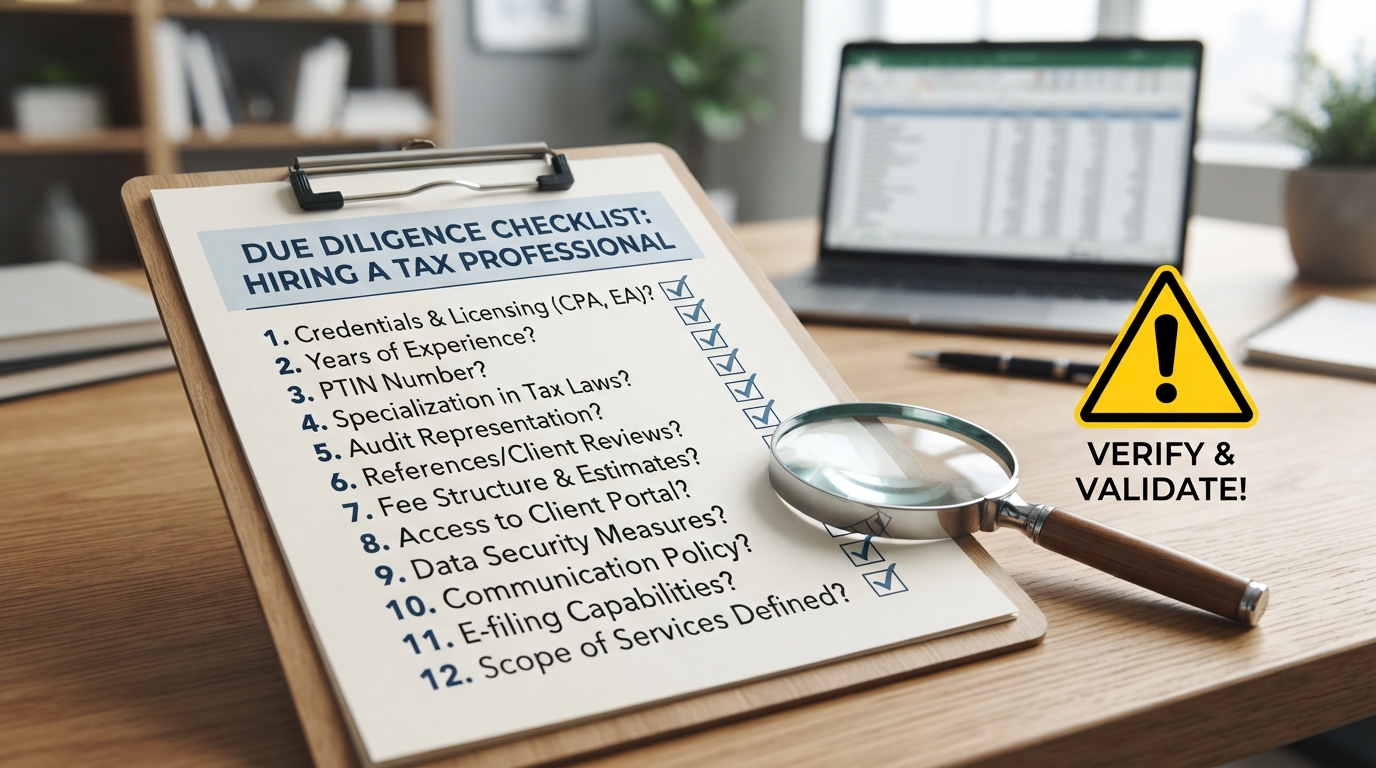
To avoid tax resolution scams, verify that the individual handling your case is a named Certified Public Accountant (CPA), Enrolled Agent (EA), or Tax Attorney with verifiable state licensing. Never hire a firm that quotes a settlement amount or guarantees an outcome before pulling and reviewing your official IRS account transcripts.
The tax relief industry is unfortunately plagued by aggressive national marketing firms that operate like high-pressure sales call centers. These companies run heavy TV, radio, and online ads promising 'pennies on the dollar' settlements before ever looking at a taxpayer's IRS transcript. Once a deposit is paid, files are often handed off to unlicensed case managers in processing departments. Before giving your credit card or signing an agreement with any firm, ask these 12 essential questions.
# 12 Critical Questions Every Taxpayer Must Ask
1. Who will actually review my IRS account and handle the IRS negotiations — a named licensed CPA/EA/Attorney or an unlicensed case manager?
2. Can I verify your license directly with the State Board of Accountancy or IRS Office of Professional Responsibility?
3. What credentials do you hold beyond basic tax preparation? (e.g. Certified Tax Resolution Specialist - CTRS)
4. Do you guarantee an Offer in Compromise settlement amount on our first phone call?
5. What happens if my financial situation changes during the resolution process?
6. Will you tell me if my case is simple enough to handle myself directly with the IRS online tools?
7. Are your fees structured as a flat fee with defined scope or will there be surprise billing phases?
8. Do you require a credit card deposit before pulling my official IRS transcripts?
9. How do you handle unfiled back tax returns before negotiating payment plans?
10. If an IRS Revenue Officer visits my home or business, will a CPA speak to them directly on my behalf?
11. What is your policy if an Offer in Compromise is returned due to incomplete IRS records?
12. Are you an independent local practice subject to Circular 230 ethical regulations or a national lead-generation company?
Critical CPA Takeaway
Question 12 is the most revealing: Legitimate CPAs are strictly bound by Treasury Circular 230 rules of practice. Unlicensed 'tax consultants' at marketing firms carry no such legal accountability.
# The Three Only Credentials With Unlimited Representation Rights
Only three categories of professionals possess unlimited rights to represent taxpayers before the Internal Revenue Service across all 50 states: Certified Public Accountants (CPAs), Enrolled Agents (EAs), and Attorneys.
Job titles like 'Tax Relief Specialist', 'Senior Tax Consultant', or 'Resolution Case Manager' are unregulated marketing titles. Anyone can print those on a business card.
At Next Level Tax Resolution, Katherine M. Johnson has been a licensed CPA since 1996 and earned the Certified Tax Resolution Specialist (CTRS) credential from the American Society of Tax Problem Solvers (ASTPS).
Facing This Exact IRS Situation?
Don't speak with an automated call center or non-licensed salesperson. Speak directly with Katherine M. Johnson, CPA, CTRS.
Free Educational Download
The IRS Catch-Up Roadmap
How many years you actually need to file, how to obtain your income transcripts without records, and why IRS Substitute Returns overstate what you owe.
Frequently Asked Questions (FAQ)
Q: Can a tax resolution firm guarantee that the IRS will accept my settlement?
No. Under Treasury Circular 230 regulations, no practitioner can ethically guarantee an IRS settlement or legal outcome. Any firm making such guarantees is using deceptive sales practices.
Summary & Next Steps
Bring these 12 questions to your consultation. At Next Level Tax Resolution, Katherine Johnson, CPA, CTRS personally evaluates every file, providing clear, honest, and ethical guidance from day one. Learn more about why working with a CPA beats a tax relief company.
Katherine M. Johnson, CPA, CTRS
Katherine M. Johnson is a licensed CPA with over 30 years of experience and a Certified Tax Resolution Specialist (CTRS). She personally handles every case — representing individuals and businesses before the IRS and state revenue departments nationwide.
Related Guides & Articles
Reasonable Cause Penalty Relief: How Serious Illness or Natural Disaster Removes Penalties
Did a severe medical crisis or natural disaster prevent you from filing on time? The IRS waives failure-to-file penalties if you establish reasonable cause.
Currently Not Collectible (CNC) Status: How to Pause IRS Collection Entirely
If paying your tax debt would prevent you from affording food, rent, or utilities, the IRS can place your account in hardship status. Levies stop while the 10-year clock keeps running.
Penalty Abatement: Reduce or Remove IRS Tax Penalties Legally
IRS penalties can quickly double or triple your tax bill. Learn how First-Time Abatement and Reasonable Cause relief allow taxpayers to legally reduce or eliminate IRS tax penalties.