
First-Time Penalty Abatement: The Secret IRS Policy That Erases Thousands in Penalties
If you have a clean three-year filing history, the IRS has an administrative rule that allows automatic penalty removal for a single tax year. Learn if you qualify and how to claim it.

Katherine M. Johnson, CPA, CTRS
Lead Tax Resolution CPA
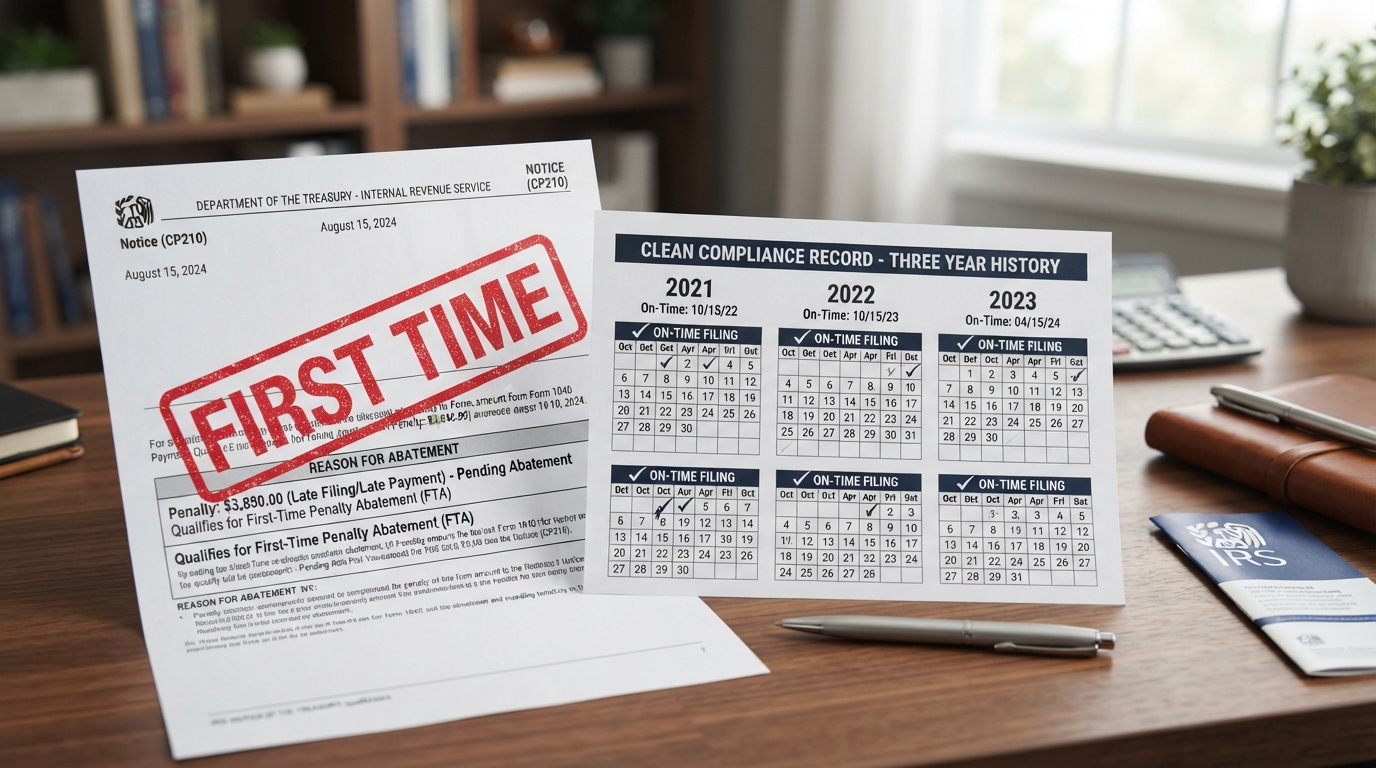
First-Time Penalty Abatement (FTA) is an administrative waiver that automatically removes Failure-to-File, Failure-to-Pay, or Failure-to-Deposit penalties for a single tax year if you have a clean compliance record for the preceding 3 years and are current on filing.
Failure-to-File and Failure-to-Pay penalties often add 25% to 50% on top of an assessed tax balance. Fortunately, the IRS offers an administrative waiver known as First-Time Penalty Abatement (FTA).
# Qualifications for First-Time Penalty Abatement (IRM 20.1.1.3.3.2.1)
1. Clean Filing History: You must have no penalties assessed for the 3 tax years prior to the penalty year.
2. Current Filing Compliance: All required returns must be filed or have a valid extension.
3. Payment Arrangement: You must be paid in full or entered into an active Installment Agreement.
Frequently Asked Questions (FAQ)
Q: Does First-Time Abatement remove interest charges as well?
Interest cannot be abated directly under FTA. However, because interest is calculated on penalty balances, abating penalties automatically reduces the total interest owed.
Summary & Next Steps
We routinely request First-Time Penalty Abatement during client resolutions, erasing thousands in penalties. Learn more about penalty abatement and reasonable cause relief for situations that don't qualify for first-time abatement.
Katherine M. Johnson, CPA, CTRS
Katherine M. Johnson is a licensed CPA with over 30 years of experience and a Certified Tax Resolution Specialist (CTRS). She personally handles every case — representing individuals and businesses before the IRS and state revenue departments nationwide.
Related Guides & Articles
12 Questions to Ask Any Tax Resolution Firm Before Giving Them a Credit Card
Protect yourself from commissioned call centers. Ask these 12 questions to verify whether a licensed CPA, EA, or attorney will actually work on your file.
Reasonable Cause Penalty Relief: How Serious Illness or Natural Disaster Removes Penalties
Did a severe medical crisis or natural disaster prevent you from filing on time? The IRS waives failure-to-file penalties if you establish reasonable cause.
Currently Not Collectible (CNC) Status: How to Pause IRS Collection Entirely
If paying your tax debt would prevent you from affording food, rent, or utilities, the IRS can place your account in hardship status. Levies stop while the 10-year clock keeps running.