
Why Your Divorce Court Order Doesn't Stop the IRS From Pursuing You for Tax Debt
A family court judge ordered your ex to pay the back taxes. But the IRS wasn't a party to your divorce, so they can legally collect 100% from you. Here's what you must do instead.

Katherine M. Johnson, CPA, CTRS
Lead Tax Resolution CPA
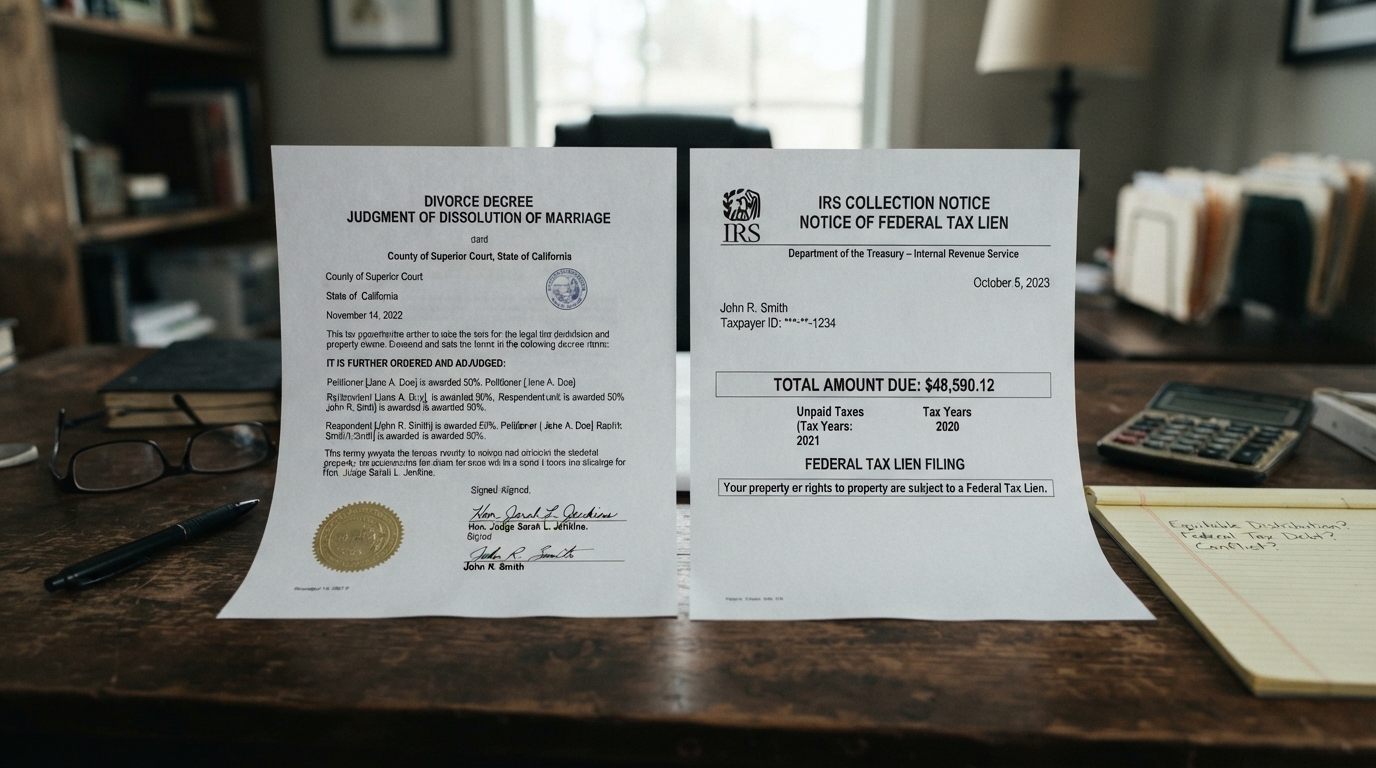
A state family court divorce decree is a contract between spouses that does NOT bind the IRS. Under IRC § 6013(d)(3), joint filers remain jointly and severally liable to the IRS regardless of divorce court orders.
One of the most expensive misunderstandings in family law and tax resolution is believing that a state court divorce decree protects you from joint IRS debt.
# Federal Tax Preemption Over State Family Court Decrees
If your divorce decree orders your ex-spouse to pay $30,000 in joint back taxes, the IRS can still legally garnish your salary or levy your bank account for 100% of the balance.
While you may have a right to sue your ex for breach of contract in state court, the IRS is legally permitted to collect from whichever spouse is easier to find.
Frequently Asked Questions (FAQ)
Q: How can I legally protect myself from joint tax liabilities after divorce?
You must file IRS Form 8857 requesting formal Innocent Spouse Relief or Separation of Liability directly with the IRS.
Summary & Next Steps
At Next Level Tax Resolution, Katherine Johnson, CPA, CTRS prepares Innocent Spouse petitions to disconnect taxpayers from ex-spousal tax debts. Learn more about innocent spouse relief and the difference between innocent spouse and injured spouse allocation.
Katherine M. Johnson, CPA, CTRS
Katherine M. Johnson is a licensed CPA with over 30 years of experience and a Certified Tax Resolution Specialist (CTRS). She personally handles every case — representing individuals and businesses before the IRS and state revenue departments nationwide.
Related Guides & Articles
Expert Tax Audit Representation: What to Expect and How to Prepare
Receiving notice of an IRS audit can be stressful, but it does not mean you have done anything wrong. Learn how tax audit representation works and how to prepare properly.
Penalty Abatement: Reduce or Remove IRS Tax Penalties Legally
IRS penalties can quickly double or triple your tax bill. Learn how First-Time Abatement and Reasonable Cause relief allow taxpayers to legally reduce or eliminate IRS tax penalties.
Innocent Spouse Relief vs. Injured Spouse Allocation: Which One Applies to You?
Held responsible for your ex-spouse's tax debt? Or did the IRS take your refund for their pre-marital balance? Here is how these two critical relief programs differ and how to apply.