
How Much Can the IRS Take From Your Paycheck? (Wage Garnishment Exemption Rules)
Unlike regular creditors who take 25%, the IRS uses exemption tables to leave you with a small fixed allowance and takes 100% of the rest. Learn how completing Form 668-W protects your check.

Katherine M. Johnson, CPA, CTRS
Lead Tax Resolution CPA
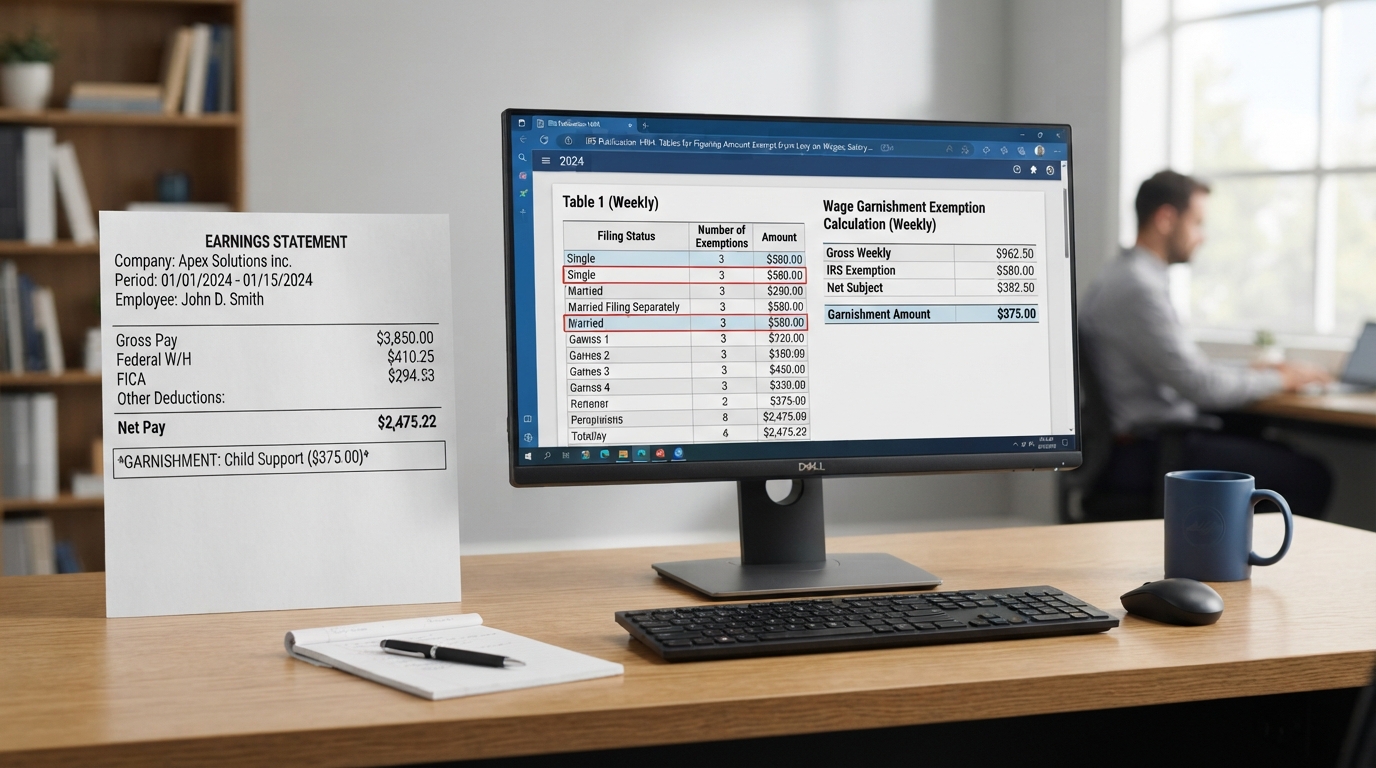
An IRS wage garnishment takes everything in your net paycheck above a statutory exempt amount determined by Publication 1494 tables. For example, a single worker with 0 dependents in 2026 might keep only around $290 per week, while the IRS garnishes 100% of the remaining salary until the debt is resolved or a CPA secures a levy release.
An IRS wage garnishment (Form 668-W, Notice of Levy on Wages, Salary, and Other Income) is one of the most aggressive enforcement actions available to the federal government. Unlike commercial credit card or medical debt collectors — who are legally capped at taking 25% of your disposable earnings — the IRS works in reverse: they leave you a small exempt allowance and take 100% of everything else.
# How Publication 1494 Exemption Tables Work
When your employer receives Form 668-W, they must hand you Part 3 (Statement of Exemptions and Filing Status).
You have 3 days to fill out Part 3 indicating your actual tax filing status and claimed dependents.
If you fail to return Part 3, your employer is legally mandated to calculate your exemption using Married Filing Separately with ZERO dependents — the lowest exemption figure on the table.
Critical CPA Takeaway
A wage garnishment is continuous. It attaches to every single pay period indefinitely until the IRS issues an official Form 668-D (Release of Levy/Garnishment).
# How a CPA fast-Tracks Wage Garnishment Releases
1. Establishing Filing Compliance: The IRS will not release a wage garnishment if you have unfiled tax returns. We immediately prepare and file missing years.
2. Demonstrating Economic Hardship: Under IRC § 6343(a)(1)(D), the IRS is required to release a levy if it creates immediate economic hardship preventing you from paying basic housing, food, or medical needs.
3. Negotiating Alternative Resolution: We negotiate a Direct Debit Installment Agreement or Currently Not Collectible status to replace the payroll garnishment.
Facing This Exact IRS Situation?
Don't speak with an automated call center or non-licensed salesperson. Speak directly with Katherine M. Johnson, CPA, CTRS.
Frequently Asked Questions (FAQ)
Q: Can my employer fire me because the IRS garnished my wages?
Under Title III of the Consumer Credit Protection Act (15 U.S.C. 1674), employers are prohibited from discharging an employee because their earnings have been subjected to garnishment for any single indebtedness.
Summary & Next Steps
If your employer just handed you an IRS Form 668-W wage garnishment notice, call Next Level Tax Resolution immediately at (800) 236-3741 to request an urgent wage garnishment release. We can also evaluate whether a payment plan or Currently Not Collectible status is the right longer-term solution.
Katherine M. Johnson, CPA, CTRS
Katherine M. Johnson is a licensed CPA with over 30 years of experience and a Certified Tax Resolution Specialist (CTRS). She personally handles every case — representing individuals and businesses before the IRS and state revenue departments nationwide.
Related Guides & Articles
When an IRS Revenue Officer Visits Your Business: What You Should and Shouldn't Do
Revenue Officers are field enforcement agents assigned to high-dollar or payroll tax cases. Learn your rights when an officer makes contact.
How to Stop Wage Garnishment and Regain Your Paycheck
Receiving an IRS wage garnishment can leave you with very little to cover living expenses. Learn how IRS wage levies work, exemption rules, and how a CPA can release the garnishment.
Tax Lien Release vs. Withdrawal vs. Subordination vs. Discharge: Which Do You Need?
Refinancing a home or selling property with a federal tax lien? Learn which of the four lien remedies applies to your situation so you don't lose weeks at closing.