Haven't Filed in 5, 10, or 15 Years? How Many Returns the IRS Actually Requires
Most non-filers assume they must file every missing year since they stopped. In reality, IRS Policy Statement 5-133 generally limits the requirement to six years. Learn how to get back on file safely.

Katherine M. Johnson, CPA, CTRS
Lead Tax Resolution CPA
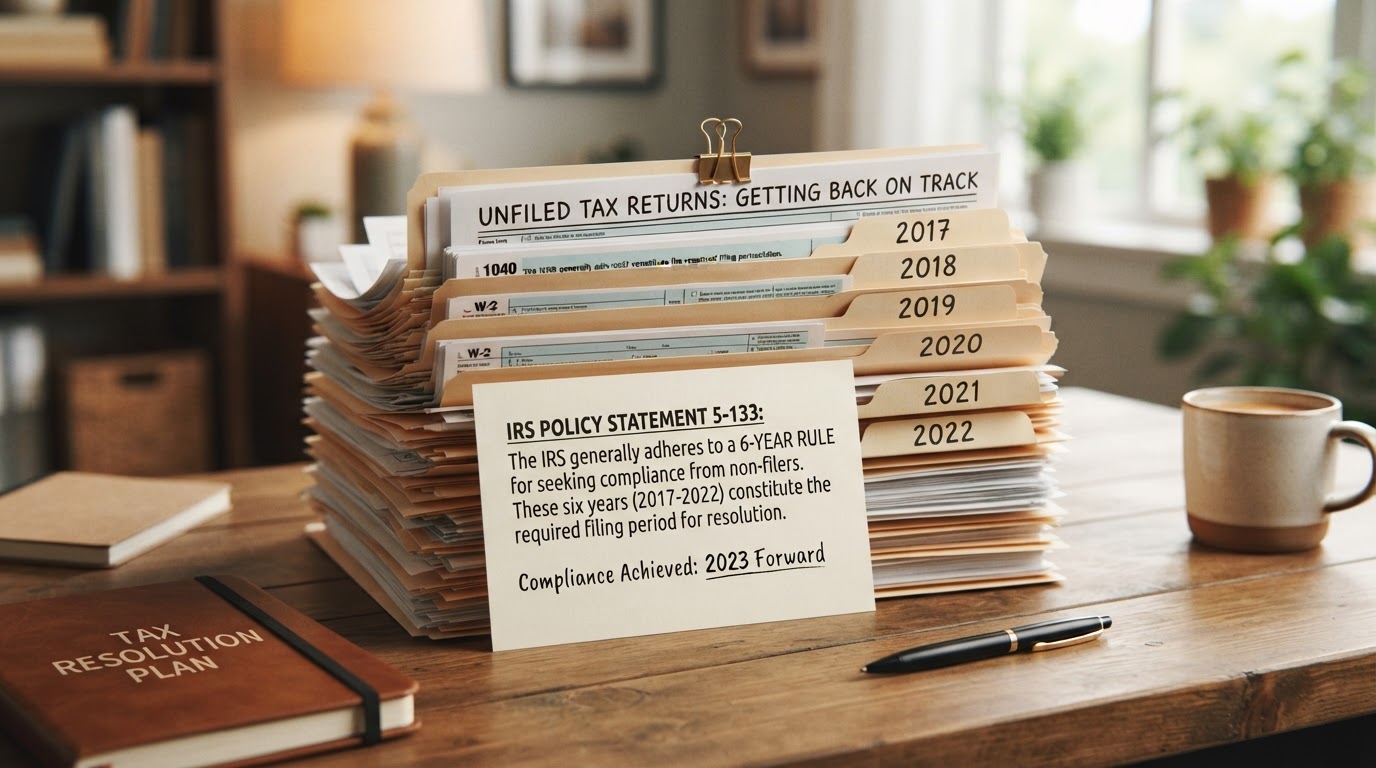
Under IRS Policy Statement 5-133 (IRM 1.2.1.6.18), the IRS generally requires non-filers to prepare and file returns for the last six (6) consecutive years to achieve full 'filing compliance'. You usually do not need to file every missing year beyond six years.
Carrying the weight of unfiled tax returns for 5, 10, or 15 years creates immense daily stress. Non-filers often assume they must prepare every missing tax return back to the beginning. Fortunately, IRS administrative policy provides a clear, manageable boundary.
# IRS Policy Statement 5-133 (IRM 1.2.1.6.18) Explained
The six-year rule is the administrative standard used by IRS Automated Collection System (ACS) and Revenue Officers.
Once six years of returns are filed and processed, you are deemed in 'filing compliance,' unlocking access to Installment Agreements, Currently Not Collectible status, or Offer in Compromise settlements.
Critical CPA Takeaway
Exceptions to the six-year rule exist if a high-level Manager determines prior unfiled years involved significant tax evasion or criminal fraud.
# How to File Missing Returns Without W-2s or Receipts
You do not need shoeboxes of old receipts to start. The IRS holds Wage & Income Transcripts recording all 1099s, W-2s, and 1098s under your Social Security number.
As your CPA, we request these transcripts directly via IRS e-Services and reconstruct missing expense records legally.
Facing This Exact IRS Situation?
Don't speak with an automated call center or non-licensed salesperson. Speak directly with Katherine M. Johnson, CPA, CTRS.
Free Educational Download
The IRS Catch-Up Roadmap
How many years you actually need to file, how to obtain your income transcripts without records, and why IRS Substitute Returns overstate what you owe.
Frequently Asked Questions (FAQ)
Q: Will filing six years of back tax returns trigger a criminal prosecution?
No. Coming forward voluntarily to file returns under Policy Statement 5-133 demonstrates voluntary compliance, which is the exact opposite of criminal evasion.
Summary & Next Steps
Getting back on file is routine and permission-giving. Contact Katherine Johnson, CPA, CTRS to pull your transcripts and bring you back into full compliance.
Katherine M. Johnson, CPA, CTRS
Katherine M. Johnson is a licensed CPA with over 30 years of experience and a Certified Tax Resolution Specialist (CTRS). She personally handles every case — representing individuals and businesses before the IRS and state revenue departments nationwide.
Related Guides & Articles
Can You Buy a House or Qualify for a Mortgage When You Owe Back Taxes?
Underwriters ask for tax transcripts and proof of filing. Learn how setting up a documented installment agreement clears the path to mortgage approval.
Smart Tax Planning Strategies to Minimize Stress and Maximize Savings
Effective tax planning is a proactive process that helps individuals and business owners make informed financial decisions throughout the year instead of scrambling when filing deadlines approach.
Substitute for Return (SFR): Why the IRS's Number Is Almost Always Too High
When you don't file, the IRS files an SFR on your behalf using 1099s/W-2s — with ZERO deductions or exemptions. Learn how preparing an original return reduces or eliminates that balance.